Neural circuit
Also known as: brain circuit
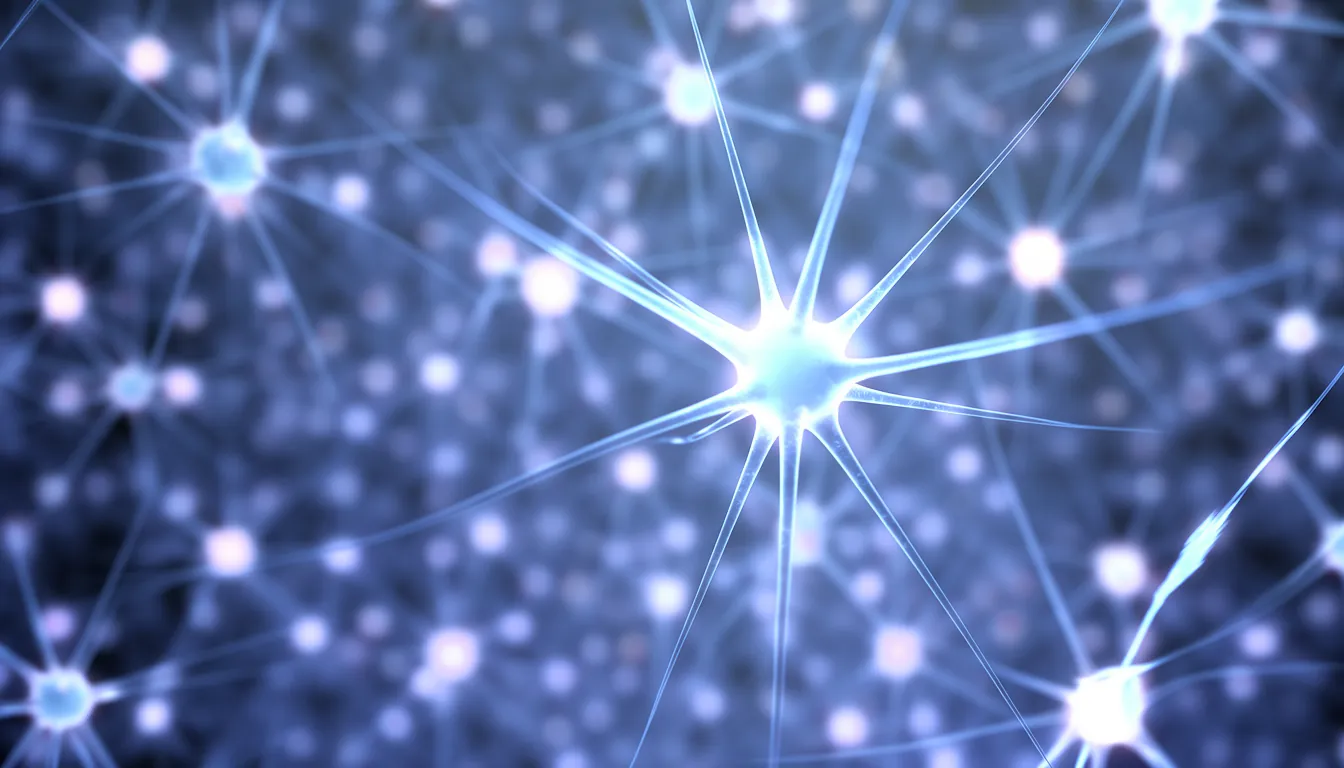
In one sentenceA neural circuit is a group of neurons connected by synapses that work together to carry out a specific function such as sensory processing, movement or memory.
Overview
The human brain contains roughly 86 billion neurons, each exchanging signals with others through synapses. A set of neurons wired together to perform a function is called a neural circuit.
Building blocks
- Excitatory neurons send signals that activate their targets. In the cerebral cortex they mainly use glutamate.
- Inhibitory neurons mostly use GABA to suppress their targets and keep circuits from becoming overexcited.
- Wiring patterns such as feedforward, feedback and recurrent connections determine what computation a circuit performs.
Local and large-scale circuits
Local circuits form among neighboring cells within one cortical area. Large-scale circuits link distant regions such as the cortex, thalamus and basal ganglia; the cortico–basal ganglia–thalamic loop involved in motor control is a classic example.
How circuits are studied
Circuit research asks two questions together: which cells connect to which (structure), and when and how those connections operate (function). Key tools include optogenetics, which switches specific cells on and off, fMRI, which records whole-brain activity, and optogenetic fMRI, which combines the two.
The lab of Jin Hyung Lee at Stanford states its goal as understanding the connectivity and function of large-scale brain circuits in order to drive new therapies for neurological diseases.
Circuits and the mind
Many studies try to explain cognitive functions such as memory and attention through cooperating circuits. Working memory is a prominent example studied in terms of sustained circuit activity.
Related entries
- Optogenetics — Optogenetics delivers light-sensitive proteins to chosen neurons so researchers can switch those cells on or off with light, with millisecond precision.
- Optogenetic fMRI (ofMRI) — Optogenetic fMRI (ofMRI) drives specific neurons with light while measuring whole-brain responses with fMRI, mapping the circuits those cells recruit.
- Functional magnetic resonance imaging (fMRI) — fMRI uses MRI to track blood-oxygen changes (the BOLD signal) that follow neural activity, showing noninvasively which brain regions are active.
- Working memory — Working memory holds information in mind for seconds while you manipulate it, supporting mental arithmetic, conversation and planning.
References
- Equal numbers of neuronal and nonneuronal cells make the human brain an isometrically scaled-up primate brain. Azevedo FAC et al. Journal of Comparative Neurology 513, 532–541 (2009)
- Principles of Neural Science, 6th ed.. Kandel ER, Koester JD, Mack SH, Siegelbaum SA (eds). McGraw Hill (2021)
- Stanford University Lee Lab