Jin Hyung Lee (neuroscientist)
Also known as: Professor Jin Hyung Lee, Jin Lee Stanford
In one sentenceJin Hyung Lee is a Stanford associate professor of neurology, neurosurgery and bioengineering, known for optogenetic fMRI (ofMRI) and brain circuit research.
Overview
Jin Hyung Lee studies the brain as a vast circuit, combining engineering and biology to work out how that circuit is wired and how it functions. Lee is an associate professor of neurology and neurological sciences, of neurosurgery and of bioengineering at Stanford University, with a courtesy appointment in electrical engineering, and a member of Stanford Bio-X and the Wu Tsai Neurosciences Institute.
The official Stanford profile lists Lee’s research interest as “in vivo visualization and control of neural circuits.” The lab’s website carries the line “Understand and Repair Brain Circuits.”
Education and early path
Lee earned a BS in electrical engineering from Seoul National University, then an MS and a PhD (2004) in electrical engineering from Stanford. In a 2023 interview with Yonhap News Agency, Lee said that a grandmother’s long illness after a stroke, during Lee’s years as a graduate student abroad, set the goal of solving brain disease.
The engineering background still shapes the work. The lab describes using methods from medical imaging and signal processing to genetics and molecular biology to “analyze, debug, and manipulate” brain circuits.
Optogenetic fMRI (ofMRI)
Lee is the first author of the 2010 Nature paper “Global and local fMRI signals driven by neurons defined optogenetically by type and wiring,” co-authored with Karl Deisseroth, a pioneer of optogenetics, and colleagues.
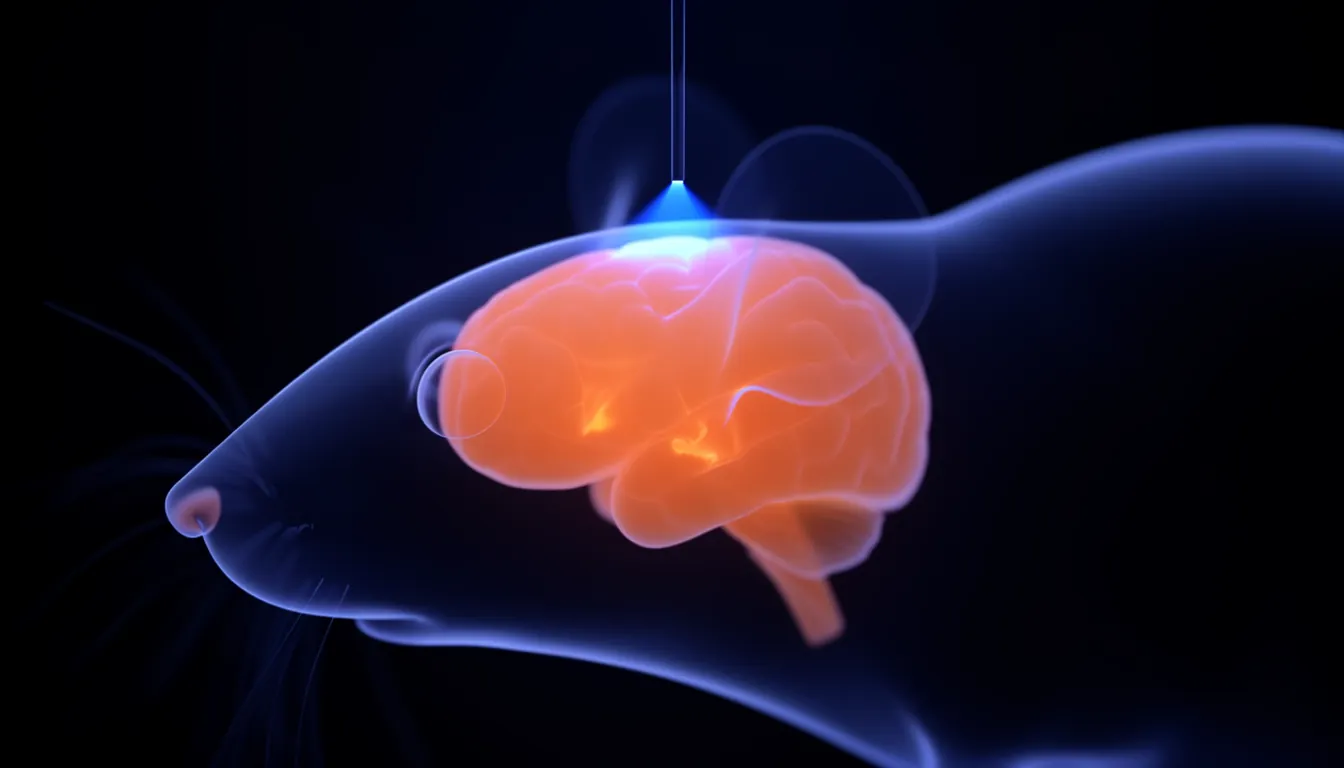
The team combined optogenetics, which switches specific neurons on with light, with fMRI, which measures activity across the whole brain. When they used light to drive only excitatory neurons in rodent motor cortex, BOLD signals appeared both at the stimulation site and in distant connected regions. This approach, which causally links the activity of defined cells to brain-wide responses, is optogenetic fMRI (ofMRI).
Circuits and brain disorders
The lab lists its current themes as circuit mechanisms underlying brain disorders, novel circuit-based therapeutic approaches, and machine learning and brain computational modeling. Grants and awards listed on the Stanford profile include work on Alzheimer’s disease, traumatic brain injury, basal ganglia circuit dynamics and epilepsy.
Noninvasive tools: mechanogenetics and functional ultrasound
In 2019 Lee received the NIH Director’s Pioneer Award. According to Stanford Medicine, the award supports two technologies: mechanogenetics, a method for noninvasive, precisely targeted mechanical perturbation of living cells in the mammalian brain, and functional ultrasound imaging that can monitor whole-brain function in awake, active animals. The lab sums up this arc as “From ofMRI to Mechanogenetic Functional Ultrasound.”
Company
According to Yonhap News Agency (2023), Lee founded the company LVIS in Silicon Valley in 2013, building on the lab’s research. LVIS develops NeuroMatch, software that helps neurologists review and analyze EEG recordings. The company’s official page describes the technology as the product of more than a decade of research led by Lee.
Timeline
| 2004 | PhD in Electrical Engineering, Stanford University |
|---|---|
| 2010 | First author of the Nature paper combining optogenetics with fMRI (ofMRI) |
| 2010 | NIH Director’s New Innovator Award |
| 2012 | Alfred P. Sloan Research Fellowship |
| 2013 | Founded LVIS in Silicon Valley, building on the lab’s research |
| 2018 | First recipient of the Lina 50+ Award Grand Prize |
| 2019 | NIH Director’s Pioneer Award to develop noninvasive mechanogenetics and functional ultrasound imaging |
Selected honors
- 2010 — NIH Director’s New Innovator Award
- 2010 — Okawa Foundation Research Grant Award
- 2011 — NSF CAREER Award
- 2012 — Alfred P. Sloan Foundation Research Fellowship
- 2012 — Epilepsy Therapy Project Award, Epilepsy Foundation
- 2013 — Alzheimer’s Association New Investigator Award
- 2013 — Association of Korean Neuroscientists (AKN) Junior Faculty Research Award
- 2014 — IEEE EMBS BRAIN Grand Challenge Young Investigator Award
- 2016 — Beckman Technology Development Grant Award
- 2018 — Lina 50+ Award Grand Prize (first recipient)
- 2019 — NIH Director’s Pioneer Award
Key publication
- Lee JH, Durand R, Gradinaru V, Zhang F, Goshen I, Kim DS, Fenno LE, Ramakrishnan C, Deisseroth K. “Global and local fMRI signals driven by neurons defined optogenetically by type and wiring.” Nature 465, 788–792 (2010). doi:10.1038/nature09108
LVIS, the company Professor Jin Hyung Lee founded, introduces its NeuroMatch software on its official website; the latest publications are on the Stanford lab website. LVIS official website → · Lab website
Related entries
- Optogenetic fMRI (ofMRI) — Optogenetic fMRI (ofMRI) drives specific neurons with light while measuring whole-brain responses with fMRI, mapping the circuits those cells recruit.
- Optogenetics — Optogenetics delivers light-sensitive proteins to chosen neurons so researchers can switch those cells on or off with light, with millisecond precision.
- Functional magnetic resonance imaging (fMRI) — fMRI uses MRI to track blood-oxygen changes (the BOLD signal) that follow neural activity, showing noninvasively which brain regions are active.
- Neural circuit — A neural circuit is a group of neurons connected by synapses that work together to carry out a specific function such as sensory processing, movement or memory.
References
- Jin Hyung Lee — Stanford Profiles. Official Stanford faculty profile (title, education, honors)
- Stanford University Lee Lab. Official lab website (research themes)
- Global and local fMRI signals driven by neurons defined optogenetically by type and wiring. Lee JH et al. Nature 465, 788–792 (2010)
- $4.75 million awarded to scientists for high-risk, high-reward research. Stanford Medicine News Center, 2019-10-01
- Interview with Professor Jin Hyung Lee (in Korean). Yonhap News Agency via Financial News, 2023-07-05
- Company | LVIS Corporation. LVIS official company page
- 510(k) K250239 — LVIS NeuroMatch Software, Indications for Use. U.S. FDA, 2025-05-23