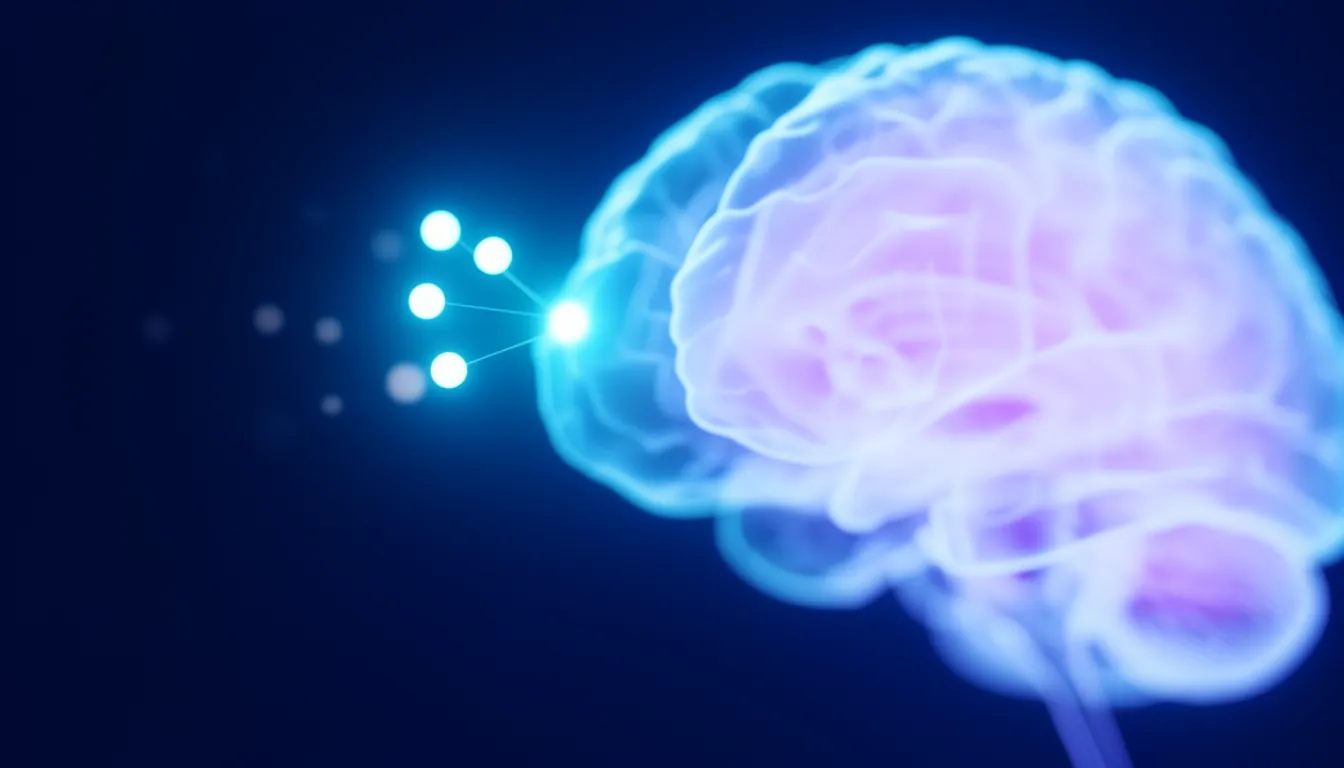
Prefrontal cortex
Also known as: PFC, frontal lobe executive function
In one sentenceThe prefrontal cortex, just behind the forehead, runs executive functions such as planning, impulse control and working memory, and matures last.
Hub of executive function
The prefrontal cortex holds goals and rules in mind and coordinates activity in other brain regions to match them. In 2001 Earl Miller and Jonathan Cohen set out a theory in which the prefrontal cortex guides behavior by sending top-down signals to other regions based on the task at hand.
Phineas Gage
In 1848 Phineas Gage, a railroad construction foreman in the United States, survived an explosion that drove an iron rod through the skull. The physician who treated Gage, John Harlow, reported in 1868 that Gage’s personality and behavior changed markedly after the accident. In 1994 Hanna Damasio’s team reconstructed the rod’s path from the preserved skull and concluded that the damage was likely concentrated in the prefrontal cortex.
Link to working memory
Monkey studies showed prefrontal neurons continuing to fire after a stimulus disappeared. This delay-period activity has long been studied as a cellular trace of working memory. Dopamine signaling also shapes how this region works.
Last to mature
In 2004 researchers scanned children and adolescents aged 4 to 21 repeatedly over several years and found that sensory and motor areas mature first while higher-order regions such as the prefrontal cortex mature last.
Related entries
- Working memory — Working memory holds information in mind for seconds while you manipulate it, supporting mental arithmetic, conversation and planning.
- Dopamine — Dopamine is a neurotransmitter for movement, motivation and reward learning. Often called the pleasure chemical, it mainly signals prediction errors.
- Neural circuit — A neural circuit is a group of neurons connected by synapses that work together to carry out a specific function such as sensory processing, movement or memory.
References
- An integrative theory of prefrontal cortex function. Miller EK, Cohen JD. Annual Review of Neuroscience 24, 167–202 (2001)
- Recovery from the passage of an iron bar through the head. Harlow JM. Publications of the Massachusetts Medical Society 2, 327–347 (1868)
- The return of Phineas Gage: clues about the brain from the skull of a famous patient. Damasio H et al. Science 264, 1102–1105 (1994)
- Cellular basis of working memory. Goldman-Rakic PS. Neuron 14, 477–485 (1995)
- Dynamic mapping of human cortical development during childhood through early adulthood. Gogtay N et al. PNAS 101, 8174–8179 (2004)