Hippocampus
Also known as: hippocampal formation
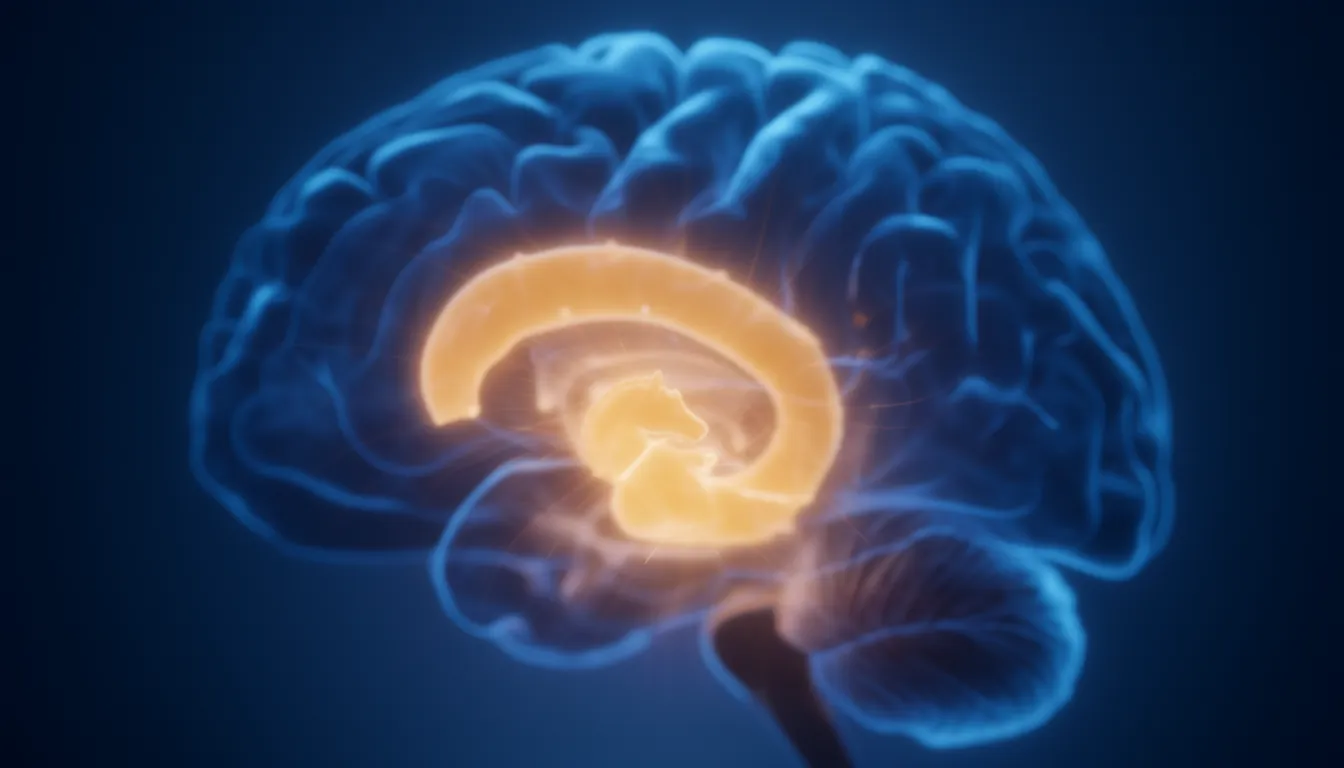
In one sentenceThe hippocampus is a structure deep in the temporal lobe that is central to turning new events and facts into long-term memories and to remembering places.
Location and name
There is one hippocampus deep inside each temporal lobe. Its curved shape reminded early anatomists of a seahorse, which is what the name means in Greek.
Where new memories are made
The patient known as H.M. (Henry Molaison) first made the hippocampus’s role clear. In 1953 Molaison underwent surgery to remove the inner part of both temporal lobes, including much of the hippocampus, to treat severe epilepsy. Afterward Molaison could no longer turn new events or facts into long-term memories. William Scoville and Brenda Milner reported the case in 1957.
Remarkably, H.M. kept working memory, the ability to hold information for a few seconds, and could still learn new motor skills. This showed that memory is not a single ability but several kinds that rely on different brain systems.
A map of space
In 1971 John O’Keefe found neurons in the rat hippocampus that fired only when the animal was in a particular place and called them place cells. May-Britt Moser and Edvard Moser later discovered grid cells, which mark space in a grid pattern, in the neighboring entorhinal cortex. The three shared the 2014 Nobel Prize in Physiology or Medicine.
Shaped by experience
In 2000 Eleanor Maguire’s team scanned London taxi drivers and found that the back of their hippocampus was larger than in other people, and that the difference grew with years of driving. The hippocampus is also where long-term potentiation of the synapse was first reported in 1973, making it a central stage for research on neuroplasticity.
Related entries
- Working memory — Working memory holds information in mind for seconds while you manipulate it, supporting mental arithmetic, conversation and planning.
- Neuroplasticity — Neuroplasticity is the brain's capacity to change synapses and connections with experience, the cellular basis of learning and memory.
- Synapse — A synapse is the junction where one neuron passes a signal to the next. Most are chemical synapses that relay the signal by releasing neurotransmitters.
References
- Loss of recent memory after bilateral hippocampal lesions. Scoville WB, Milner B. Journal of Neurology, Neurosurgery & Psychiatry 20, 11–21 (1957)
- The legacy of patient H.M. for neuroscience. Squire LR. Neuron 61, 6–9 (2009)
- The hippocampus as a spatial map. Preliminary evidence from unit activity in the freely-moving rat. O'Keefe J, Dostrovsky J. Brain Research 34, 171–175 (1971)
- The Nobel Prize in Physiology or Medicine 2014. NobelPrize.org
- Navigation-related structural change in the hippocampi of taxi drivers. Maguire EA et al. PNAS 97, 4398–4403 (2000)
- Long-lasting potentiation of synaptic transmission in the dentate area of the anaesthetized rabbit following stimulation of the perforant path. Bliss TVP, Lømo T. Journal of Physiology 232, 331–356 (1973)