Beyond the Senses: How Our Brain Fills in the Blanks
Hey neuro-enthusiasts! Have you ever wondered why you sometimes “see” things that aren’t quite there, or mishear a song lyric until someone corrects you? That’s our amazing brain doing something called **Top-Down Processing**! Imagine your brain as a super-smart detective. Instead of just taking raw clues (sensory input like sights and sounds) and building a picture from scratch (that would be Bottom-Up Processing), it uses its vast library of past experiences, knowledge, and expectations to make educated guesses and quickly interpret what’s happening. It’s like your brain already has a hypothesis and is just checking if the evidence fits! This makes our perception incredibly efficient, but it also means our expectations can totally influence what we experience.
We see things not as they are, but as we are.
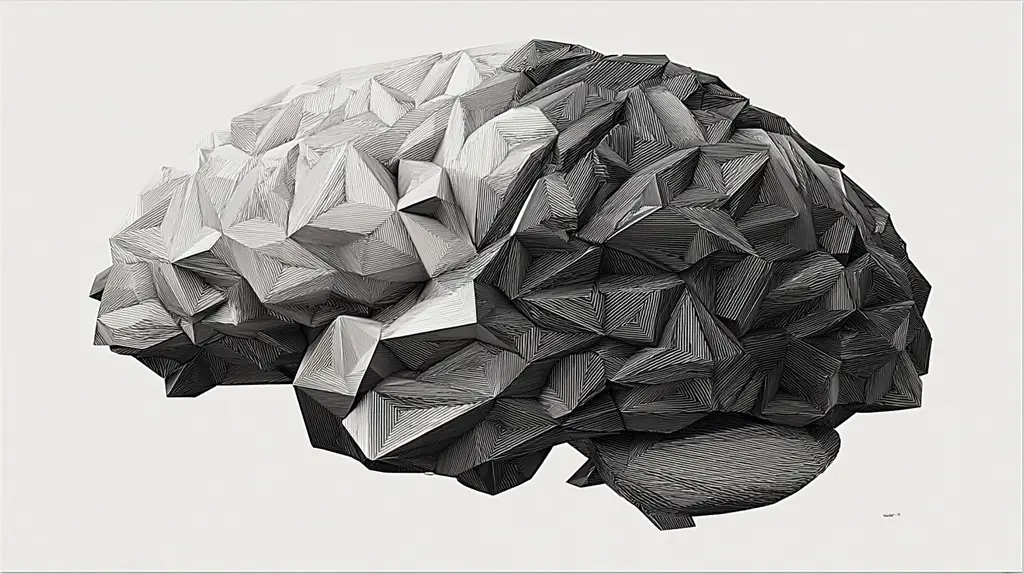
The Power of Prediction: Why Experience Matters So Much
So, why does our brain love these shortcuts? Well, constantly processing every single bit of sensory data from scratch would be super exhausting and slow. Top-Down Processing helps us predict what’s coming, allowing us to react faster and navigate our world more smoothly. Think about reading; you don’t read every letter individually, do you? Your brain uses its knowledge of words and grammar to anticipate the next word, often letting you skim. Our past experiences build these mental models, or “schemas,” that act as filters. These schemas prime us to expect certain things, speeding up recognition but sometimes leading us to overlook new details or misinterpret ambiguous information based on what we *think* should be there. It’s all about making sense of the world, even if it’s not always 100% accurate!
Top-Down Processing and You: Q&A
How Does Top-Down Processing Influence My Mood and Mental Health?
This is where it gets super interesting and relevant to our daily lives! Top-Down Processing plays a huge role in how we interpret events, and that directly impacts our emotions and mental well-being. If you tend to interpret ambiguous situations negatively because of past experiences (a top-down influence), you might feel more anxious or sad. For example, if a friend doesn’t text back immediately, your brain might jump to conclusions like “they’re mad at me” (a negative top-down interpretation) rather than “they’re probably just busy.” This is a key concept in cognitive behavioral therapy (CBT), where people learn to identify and challenge these negative top-down thought patterns to improve their mood and outlook. Understanding this can empower us to consciously try and reframe our interpretations for better mental health!
Is Top-Down Processing Always a Good Thing?
That’s a fantastic question! Top-Down Processing is a double-edged sword, honestly. On the one hand, it’s incredible for efficiency. It helps us understand complex social cues, react quickly to danger, and generally function in a busy world without getting overwhelmed. Imagine walking into your kitchen – your brain instantly recognizes it because of past experiences, no need to process every tile and appliance. But, this reliance on expectations can lead to cognitive biases, where our preconceptions distort our perceptions. Think about eyewitness testimonies; sometimes what we *expect* to see can alter what we *recall* seeing. It can also contribute to stereotypes or prejudice, as our brain fills in gaps with generalized, sometimes inaccurate, information.
How Does My Brain Know What to Expect?
Your brain is like the ultimate learning machine! It builds expectations through a lifetime of experiences, learning, and cultural influences. Every time you encounter something new, your brain tries to categorize it and store it away. These stored patterns and associations form those “schemas” we talked about. For example, if you’ve always seen birds fly, your brain forms a schema that birds fly. So, when you see a bird, your brain *expects* it to fly. This learning happens constantly, from simple sensory predictions (like expecting a door to creak) to complex social predictions (like knowing how to act in a job interview). Our brains are always updating these internal models based on new information, making us adaptable but also susceptible to the power of our own learned biases.
- LVIS Neuromatch – Explore advanced AI solutions for neuroscience.
- Neuvera – Discover more about cognitive assessment and brain health.