The Core Conflict: Automatic Reading vs. Controlled Naming
The Stroop effect demonstrates a fundamental conflict in the brain between two types of processes: automatic and controlled. Reading is a highly practiced, automatic process for most adults. It occurs without conscious effort. In contrast, naming a color is a controlled process that requires conscious attention and effort. When you see the word “BLUE” printed in red ink, your brain’s automatic response is to read the word “BLUE.” However, the task requires you to override this impulse and perform the more controlled action of naming the ink color, “red.” This clash is known as cognitive interference. It slows down your reaction time and increases the likelihood of errors because your brain must actively suppress the dominant, yet incorrect, response.
“The art of being wise is knowing what to overlook.”

The Neural Basis: A Traffic Jam in Your Prefrontal Cortex
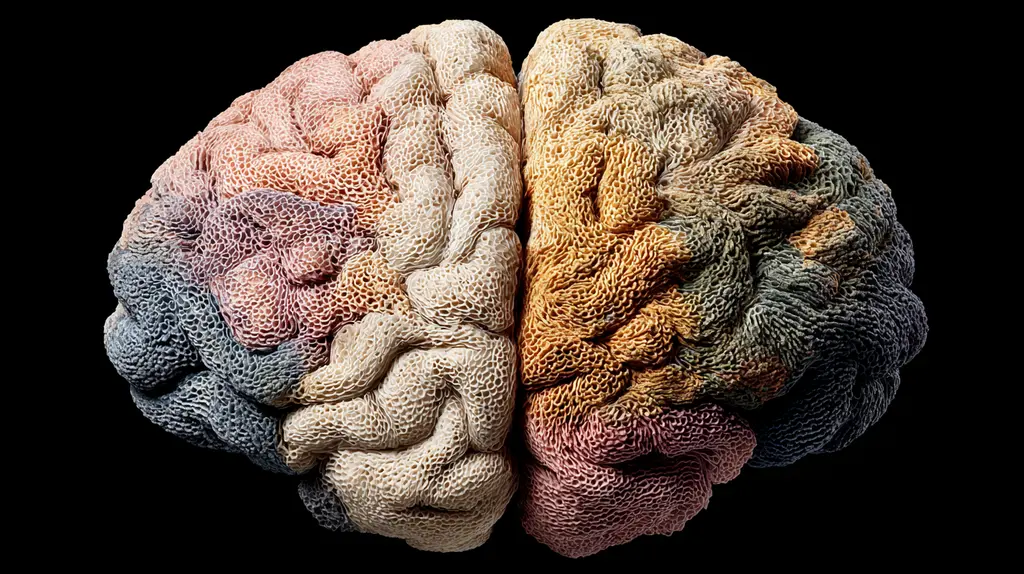
This mental battle is managed by specific regions in your brain, primarily within the prefrontal cortex. The Anterior Cingulate Cortex (ACC) acts as a conflict monitor. It detects when there is a clash between your automatic response (reading the word) and your intended goal (naming the color). Once the ACC signals this conflict, the Dorsolateral Prefrontal Cortex (DLPFC) steps in. The DLPFC is responsible for executive functions, including selective attention and response inhibition. It works to suppress the automatic reading response and amplify the signal for the correct color-naming task. The struggle you feel during the Stroop test is the tangible result of these brain regions working to resolve the interference.
From the Lab to the Clinic
Why Do Psychologists Use the Stroop Test?
Beyond being a fascinating cognitive curiosity, the Stroop test is a valuable neuropsychological tool. Clinicians use it to assess executive functions, specifically selective attention and processing speed. Performance on the test can provide insights into the health of an individual’s frontal lobes. For example, individuals with conditions like Attention-Deficit/Hyperactivity Disorder (ADHD), schizophrenia, or certain types of brain injuries may show a significantly larger Stroop effect. This indicates greater difficulty in filtering distractions and inhibiting impulsive responses. Therefore, the test helps in diagnosing and understanding the cognitive deficits associated with various neurological and psychological conditions.
Does the Effect Weaken with Age or Practice?
The strength of the Stroop effect varies across the lifespan. Children who are just becoming fluent readers often show a very strong effect because the automaticity of reading is newly established. With consistent practice of the Stroop task itself, an individual can become faster, but the underlying interference rarely disappears completely because reading remains a deeply ingrained automatic skill. In older adults, the effect can sometimes become more pronounced again. This is often linked to a natural decline in executive functions, particularly the brain’s ability to inhibit competing information, making it harder for the DLPFC to override the automatic reading impulse.
Is It Just About Colors and Words?
While the classic color-word version is the most famous, the principle of the Stroop effect applies to other domains. The Emotional Stroop Task, for example, requires a person to name the ink color of words that are emotionally charged (e.g., “DEATH,” “LOVE”). People often take longer to name the color of these words compared to neutral words (e.g., “TABLE”), as the emotional content automatically captures attention and interferes with the primary task. Another variation is the Spatial Stroop Task, where a word like “UP” might be displayed at the bottom of a screen, creating interference between the word’s meaning and its physical location. These variations show that the effect is a broad phenomenon of processing interference.
- LVIS Neuromatch – Explore advanced AI solutions for neuroscience.
- Neuvera – Discover more about cognitive assessment and brain health.