What Exactly Does ‘Modularity’ Mean in Your Brain?
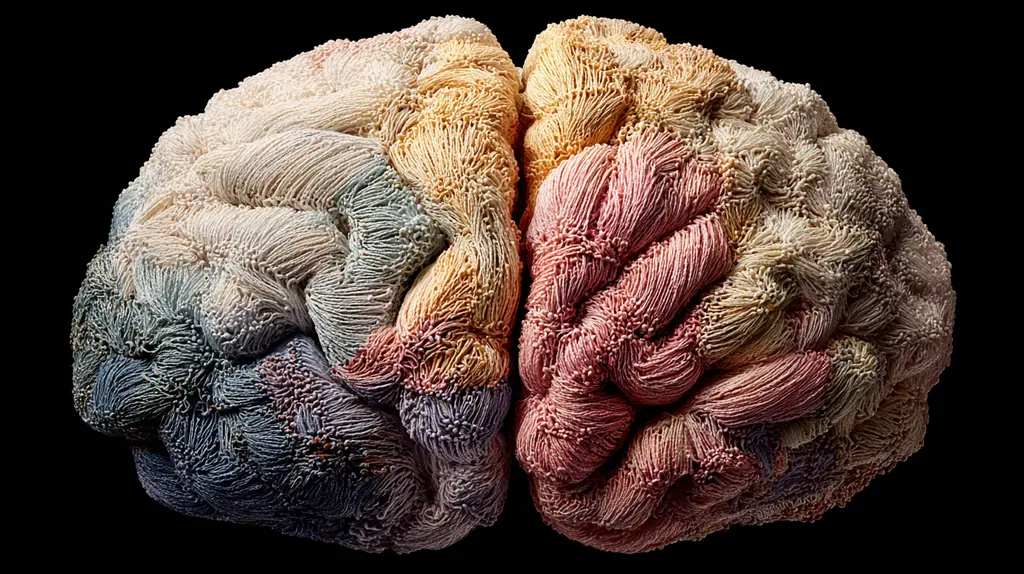
Okay, so imagine your brain isn’t just one big, mushy supercomputer, but more like a super organized apartment building! The “Modularity of Mind” theory suggests that our brains are made up of specialized, independent units, or “modules,” each designed to handle a specific cognitive task. Think about it: one module for processing faces, another for language, another for spatial awareness. These modules are thought to operate autonomously, meaning they do their job without needing too much input from other parts of the brain, at least in their initial processing stages. It’s like having a dedicated app for every function on your phone!
“Your brain: a team of specialists.”

Are All Brain Functions Modular? What About General Intelligence?
That’s a super good question! While the idea of specialized modules is really appealing for things like recognizing faces or hearing speech, not everyone agrees that *everything* in our brain works that way. Some cognitive scientists argue that higher-level functions, like general intelligence, problem-solving, or conscious thought, might not fit neatly into a single, isolated module. These complex processes often seem to involve a lot of interaction between different brain regions, suggesting a more integrated, “non-modular” approach. So, it’s more like a mix of dedicated tools and a central command center that ties everything together, making it a hot topic in neuroscience debates!
Connecting the Dots: Modularity and Everyday Cognition
How Does Modularity Relate to Cognitive Biases or Intuition?
This is a super fascinating connection! Some theories suggest that our quick, intuitive judgments and even some cognitive biases might stem from the rapid, automatic processing of certain brain modules. Imagine a module designed to quickly detect threats; it might be super efficient, but sometimes it overreacts or misinterprets information, leading to a bias. Our “gut feelings” could be the output of these fast-acting, specialized modules that operate without our conscious oversight. While our rational, reflective thinking might involve more integrated brain networks, many of our snap decisions could be powered by these underlying, modular processes that developed for efficiency and survival!

How Does Modularity Help Us Understand Brain Damage?
This is where modularity really shines a light on things! If your brain is made of independent modules, then damage to one specific area might impair just that one function, leaving others intact. For example, if someone has a stroke that affects their language processing module, they might struggle with speaking or understanding words (a condition called aphasia), but their ability to recognize faces or solve mathematical problems could be completely fine. This selective impairment provides strong evidence for the idea that these cognitive functions are indeed handled by distinct, localized brain parts, rather than being distributed everywhere.
Is the Modularity of Mind a Universally Accepted Theory?
Honestly, no, it’s not universally accepted, and that’s what makes it so exciting to study! While many scientists agree that there’s *some* degree of specialization in the brain (like specific areas for vision or motor control), the idea of strictly “encapsulated” or totally isolated modules for *all* cognitive functions is still debated. Critics argue that brain regions are highly interconnected and flexible, often working together in complex networks. They suggest that what might look like a module could actually be a network that can be reconfigured depending on the task. So, while modularity is a super useful concept, especially for understanding sensory input, its reach into all aspects of cognition is still an active area of research!
- LVIS Neuromatch – Explore advanced AI solutions for neuroscience.
- Neuvera – Discover more about cognitive assessment and brain health.