Its Role as a Temporary Workspace
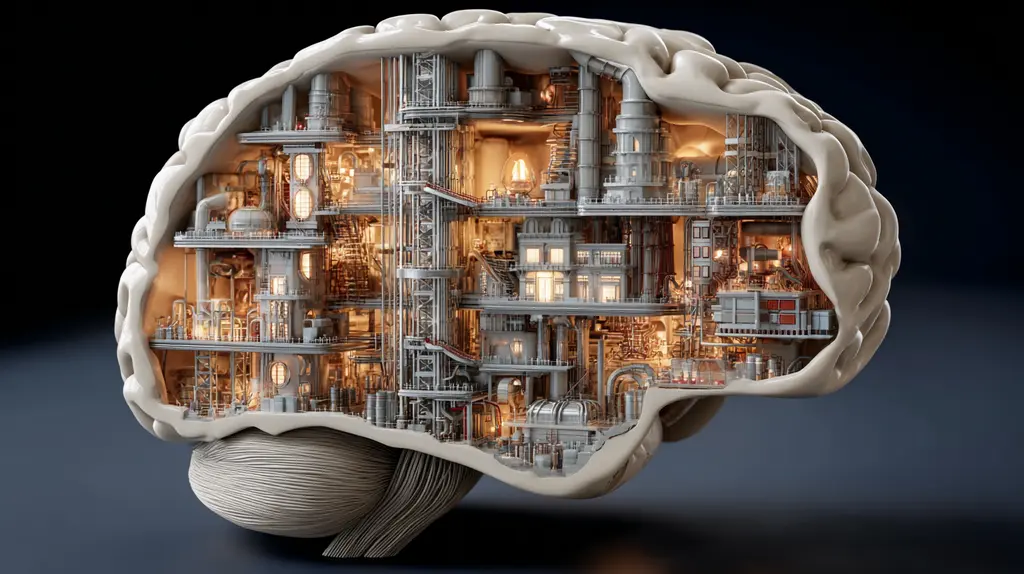
The episodic buffer is a component of the working memory model. It functions as a temporary, limited-capacity storage system responsible for integrating information from various sources. Think of it as a mental “workbench” where your brain combines visual information from your eyes, verbal information from conversations, and relevant facts from your long-term memory. This integration process allows these separate streams of information to be bound together into a single, coherent unit or “episode.” For example, when you’re watching a movie, the episodic buffer is what allows you to connect the characters’ dialogue, their facial expressions, and your memory of the preceding plot points into a unified, understandable scene. It holds and manipulates this complex data, making it available for conscious awareness.
The buffer is where disconnected moments become unified memories.
The Link to Conscious Awareness
The output of the episodic buffer is directly linked to our subjective experience of consciousness. It is this integrated, multi-dimensional representation of reality that we perceive as the “present moment.” Without it, our experience would be a chaotic stream of disconnected sounds, images, and thoughts. The buffer acts as the director in the theater of your mind, taking inputs from different “actors”—like the phonological loop (handling sounds) and the visuospatial sketchpad (handling visuals)—and weaving them into the narrative you experience as reality. This binding process is crucial for creating a continuous sense of self and for forming the new, rich memories that are later stored long-term.
How does it relate to other memory systems?
Is the Episodic Buffer the same as Short-Term Memory?
No, they are distinct concepts. Short-term memory is often viewed as a more passive, temporary storage bin that holds a small amount of information (like a phone number) for a very brief period. The episodic buffer, as part of the more modern “working memory” model, is an active system. It doesn’t just store information; it actively manipulates it. Its key role is integration—binding information from the other components of working memory (the phonological loop and visuospatial sketchpad) with knowledge from long-term memory. While short-term memory is like a temporary note, the episodic buffer is like the dynamic workspace where that note is combined with other documents and pictures to create a complete project.
How does it help in understanding a story?
When you listen to a story or engage in a conversation, the episodic buffer is essential for comprehension. It holds the beginning of a sentence so you can connect it to the end, and it links the current sentence to the previous one to build a coherent narrative. Simultaneously, it pulls relevant information from your long-term memory—such as the definition of words, your relationship with the speaker, and past events—to provide context. This active integration is what separates true understanding from merely hearing a sequence of words. It allows you to follow complex plots, understand jokes that rely on prior information, and grasp the underlying meaning in a conversation, making social interaction and learning possible.
What happens if the Episodic Buffer is impaired?
Impairment of the episodic buffer can lead to significant cognitive difficulties. Individuals may struggle to follow multi-step instructions, lose track of conversations, or find it difficult to understand how different pieces of information relate to one another. This can manifest as a feeling of being constantly “lost” or mentally disorganized. Such deficits are a key feature in several neurological and psychiatric conditions. For instance, in Alzheimer’s disease, a dysfunctional episodic buffer contributes to the characteristic memory loss and confusion. Similarly, in conditions like schizophrenia, problems with this system can lead to disorganized thoughts and a fragmented perception of reality, as the brain fails to bind experiences into coherent episodes.
- LVIS Neuromatch – Explore advanced AI solutions for neuroscience.
- Neuvera – Discover more about cognitive assessment and brain health.