Breaking Down the Basics: The Brain’s Language Lab
Sentence processing is basically how our brains take a string of words and figure out what they mean, almost instantly! Think of it like a super-fast internal translation service. It involves recognizing words, understanding their grammatical roles (who did what to whom), and then combining all this information to grasp the full message of a sentence. It’s a complex dance between different brain areas that allows us to communicate and comprehend everything from casual chats to complex textbooks.
Words weave worlds.

The ‘Why’ Behind the Words: Syntax and Semantics
When we process sentences, our brain juggles two main things: syntax and semantics. Syntax is like the grammar rules—the structure of how words fit together to form a valid sentence. Semantics is all about the meaning of individual words and how those meanings combine. For example, in “The cat chased the mouse,” syntax tells us “cat” is the subject doing the chasing, and semantics tells us what a “cat,” “chase,” and “mouse” are. Our brain quickly processes both to get the full picture!
Q&A: The Brain’s Role in Language Beyond Sentences
How Do Brain Disorders Affect Sentence Processing?
Brain disorders can significantly impact sentence processing, leading to various language difficulties. For example, individuals with aphasia, often caused by stroke, might struggle with understanding complex sentences or forming grammatically correct ones. Specific areas like Broca’s area (involved in speech production and syntax) and Wernicke’s area (involved in language comprehension) are crucial. Damage to these or connecting pathways can disrupt the intricate network responsible for fluent and meaningful sentence processing, highlighting the brain’s delicate balance in language.
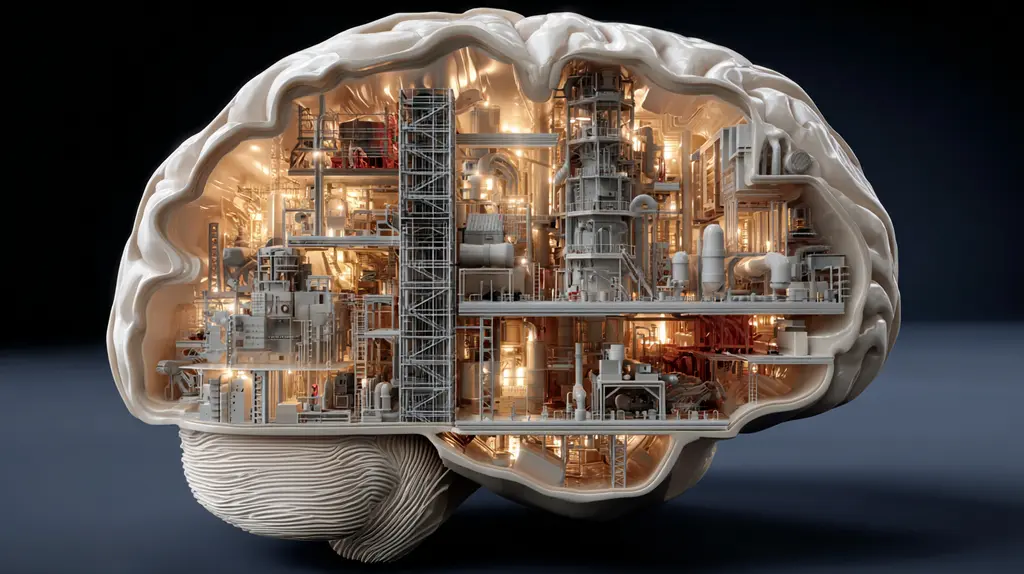
How Does Our Brain Handle Ambiguous Sentences?
Ambiguous sentences are those tricky ones that can have more than one meaning, like “She saw the man with the binoculars.” Did she use binoculars to see him, or did the man have them? Our brain usually tries to pick the most likely meaning based on context, prior knowledge, and the most common grammatical structures. Researchers study this by looking at brain activity when people encounter such sentences, revealing how our brains resolve these linguistic puzzles, often by temporarily holding onto multiple interpretations before settling on one.
Are Some Sentences Harder for Our Brains to Process?
Absolutely! Sentences with complex grammatical structures, like passive voice (“The ball was hit by the boy”) or nested clauses (“The girl the boy liked smiled”), often take more effort and time for our brains to process. This is because they deviate from the typical subject-verb-object order we usually expect, requiring our brain to do extra work to untangle the relationships between words. Also, sentences with unexpected or unfamiliar vocabulary can slow down semantic processing, as our brain searches for meaning.
- LVIS Neuromatch – Explore advanced AI solutions for neuroscience.
- Neuvera – Discover more about cognitive assessment and brain health.