Breaking Down the Basics: Models and Simulations
Okay, so let’s get into it. Computational modeling sounds super complex, but the basic idea is pretty straightforward. Imagine you’re trying to understand a really complicated system, like, say, our brain. Instead of messing with a real one (which is ethically tricky and super difficult), we build a simplified version of it on a computer. This simplified version is the “model.” It’s made of math and algorithms that represent how we *think* parts of the brain work, like how neurons chat with each other. Then, we hit “run” – that’s the “simulation” part. We feed the model some information and watch how it behaves, which gives us clues about how the real brain might be working. It’s like a flight simulator, but for the brain!
“The purpose of computing is insight, not numbers.” – Richard Hamming
Why Bother? The ‘Why’ Behind the Model
You might be wondering, “Why go through all this trouble?” Well, it’s HUGE for neuroscience. These models let us do experiments that would be impossible in a living person. For example, we can test what happens to a “brain” when a certain connection between neurons is weaker than normal, which could give us major insights into diseases like schizophrenia or depression. It’s a safe, virtual playground to test our wildest theories about the brain. This helps researchers develop new hypotheses about how the brain works and even design better treatments for mental health conditions. It’s all about understanding the brain’s mysteries without any of the real-world risks.
Getting Real with Models
What are the limits? Can these models be wrong?
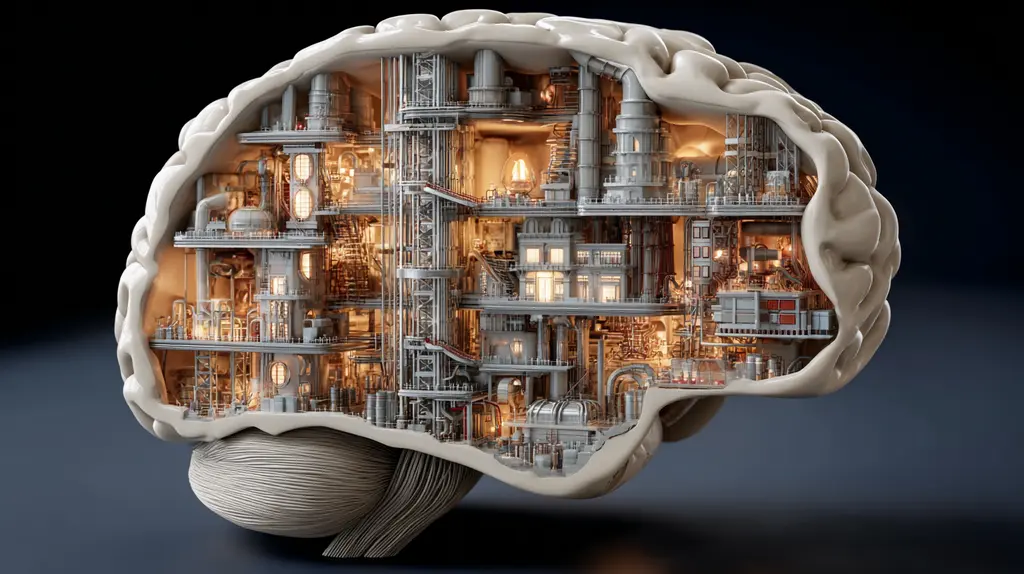
OMG, yes. This is such an important question. A model is only as good as the data and assumptions we build it on. The brain is ridiculously complex, and we still don’t know so much about it. So, every model is a simplification. If our initial theory about how a brain circuit works is wrong, the model will be wrong too – it’s a classic “garbage in, garbage out” situation. Also, the brain isn’t just a computer made of meat; it’s influenced by hormones, gut health, sleep… you name it. Most models can’t capture all of that beautiful, messy biological detail. So, scientists have to be super careful and always compare their model’s results with real-world biological experiments. Models are a powerful tool, not a perfect crystal ball.
How does it actually help us understand stuff like, say, anxiety?
This is where it gets really cool. Let’s talk anxiety. Scientists have theories that anxiety disorders might be linked to hyperactivity in certain brain circuits, like the amygdala (our brain’s little fear hub). With computational modeling, we can create a model of that exact circuit. We can then tweak different variables, like the strength of connections between neurons or the levels of certain neurotransmitters, and run a simulation to see if the circuit becomes overactive. If the model’s behavior starts to look like what we see in anxious brains, it supports our theory! It helps us pinpoint what might be going wrong on a tiny, cellular level, which is a massive step towards finding better ways to help people manage their anxiety.
Is this like… the beginning of The Matrix? Are we creating AI brains?
Haha, totally get why you’d ask that! It sounds very sci-fi. But honestly, we are miles away from The Matrix. The key difference is the goal. In cognitive science, we use computational models to *understand* the brain, not to recreate a conscious mind. These models are usually super specific, focusing on one tiny aspect of the brain, like how we recognize faces or make a decision. They aren’t general-purpose “brains” that can think or feel. While some of the tech is related to what’s used in AI, the application is totally different. Think of it less as creating a new consciousness and more as building a highly detailed blueprint to figure out how our own consciousness works.
- LVIS Neuromatch – Explore advanced AI solutions for neuroscience.
- Neuvera – Discover more about cognitive assessment and brain health.