Building General Rules from Specific Experiences
Hey there! So, inductive reasoning is basically how your brain takes a bunch of specific observations and then creates a general rule or principle. Think about it like this: you see a few black cats, and they all seem friendly. So, your brain might jump to the conclusion that “all black cats are friendly.” It’s a way we make sense of the world, going from the ‘known specifics’ to ‘likely generalities.’ It helps us predict what might happen next based on past experiences, which is super useful in daily life!
Experience builds belief.
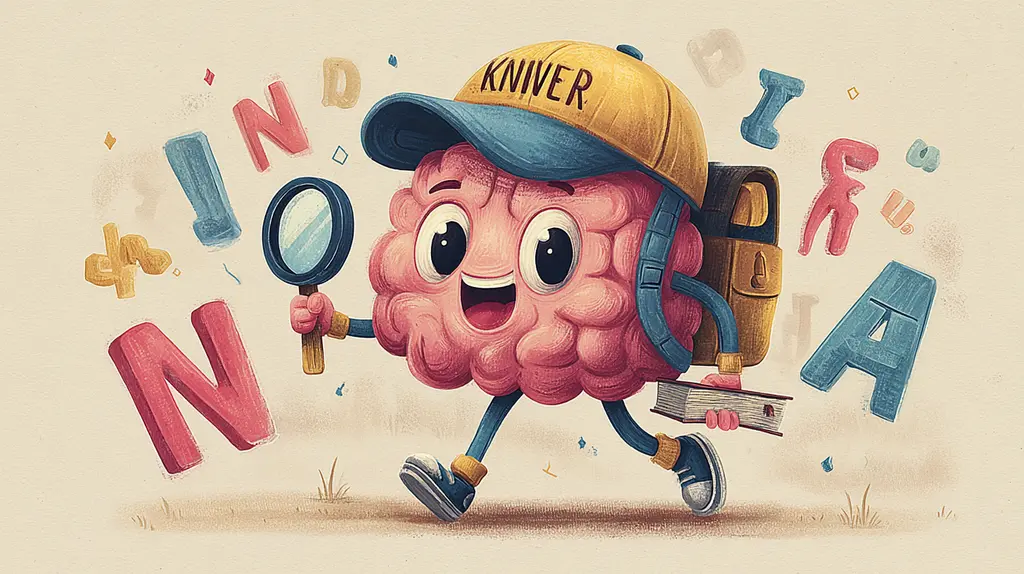
Inductive Reasoning vs. Deductive Reasoning: What’s the Diff?
Okay, so while inductive reasoning is about building up a general idea from specific examples, deductive reasoning is the opposite! Deductive reasoning starts with a general statement or a known truth and then applies it to specific situations to reach a certain conclusion. For example, if you know “all dogs bark” (general truth) and “Buddy is a dog” (specific instance), then you can deductively conclude “Buddy barks.” Both are super important for critical thinking, but they work in different directions!
Inductive Reasoning and Beyond!
Q3: How does inductive reasoning relate to learning and scientific discovery?
Inductive reasoning is like, the *foundation* of learning and scientific discovery! Scientists observe phenomena, collect data, and then use inductive reasoning to form hypotheses and theories. For example, by observing that various objects fall to the earth, Isaac Newton inductively reasoned the law of universal gravitation. In our daily lives, it’s how babies learn language by hearing specific words and then inferring grammatical rules. It’s all about finding patterns and making sense of the world around us, driving both personal growth and scientific breakthroughs!
Q1: How does inductive reasoning help us in everyday decision-making?
Inductive reasoning is totally at play in almost every decision you make! Imagine trying a new coffee shop. If your first few lattes there are amazing, you’ll likely conclude that their lattes are generally great and keep going back. If they’re consistently bad, you’ll inductively reason that this shop isn’t for you. It’s how we learn from our experiences and make quick judgments without having to analyze every single new situation from scratch. It saves us a lot of mental energy!
Q2: Can inductive reasoning ever be wrong?
Oh, absolutely! That’s the tricky part about it. Because inductive reasoning is about making educated guesses based on probability, there’s always a chance your conclusion might not be 100% correct. Remember the black cat example? Even if you’ve met a bunch of friendly black cats, you might encounter an unfriendly one someday. This is why we need to be open to new information and adjust our general conclusions. It’s not about certainty, but about likelihood!
- LVIS Neuromatch – Explore advanced AI solutions for neuroscience.
- Neuvera – Discover more about cognitive assessment and brain health.