From General Rules to Specific Truths: The Basics!
Hey everyone! So, have you ever played a game where if X is true, then Y absolutely *has* to be true? That’s kinda like deductive reasoning in a nutshell! It’s this super cool way of thinking where we start with a really general statement or rule (we call these ‘premises’) that we know or assume to be true. Then, we use that big rule to figure out something very specific that *must* be true. It’s like having a universal law and applying it to a single case to get an undeniable answer. Think of it as a logical funnel, going from broad to narrow, making sure the conclusion is totally contained within the initial truths. Pretty neat, right?
“Logic is the beginning of wisdom, not the end.”

Why ‘Guaranteed True’ Makes It So Cool!
The absolute coolest thing about deductive reasoning is the certainty! If your starting premises are actually true, and your logic is sound (meaning you followed the rules correctly), then your conclusion *has* to be true. There’s no “maybe” about it; it’s a guaranteed truth! This is super different from other types of reasoning where you might just find strong evidence or a high probability. With deduction, it’s a logical slam dunk! It means we can build knowledge with a really strong foundation, piece by logical piece. It’s like a mental superpower for finding undeniable truths from what we already know!
Deductive Reasoning in Real Life: More Than Just Textbooks!
Where Do We Use Deductive Reasoning Every Day?
You might think deductive reasoning sounds super academic, but we actually use it all the time without even realizing it! Think about simple things: “If it’s raining, I need an umbrella. It’s raining, so I need an umbrella!” Or when you’re following a recipe: “If step A isn’t done, I can’t do step B. Step A isn’t done, so I can’t do step B.” Doctors use it when they diagnose: “If a patient has symptoms X, Y, and Z, they likely have condition A. This patient has X, Y, and Z, so they likely have condition A.” It helps us make plans, follow instructions, and solve all sorts of little problems efficiently throughout our day. It’s a core part of how we navigate the world logically!

Is Deductive Reasoning Always Right?
Okay, so I just hyped up the “guaranteed true” part, but here’s the little catch: deductive reasoning is only *truly* infallible if your initial premises are actually true *and* your argument structure is valid. What’s “validity”? It means the conclusion *logically follows* from the premises, even if the premises themselves are false. If an argument is both valid *and* has all true premises, then we call it “sound.” A valid argument can still lead to a false conclusion if its premises are false, but a sound argument always leads to a true conclusion. So, it’s not always “right” if you start with bunk information, but the *method* itself is rock solid!
How Does Our Brain Actually Do This?
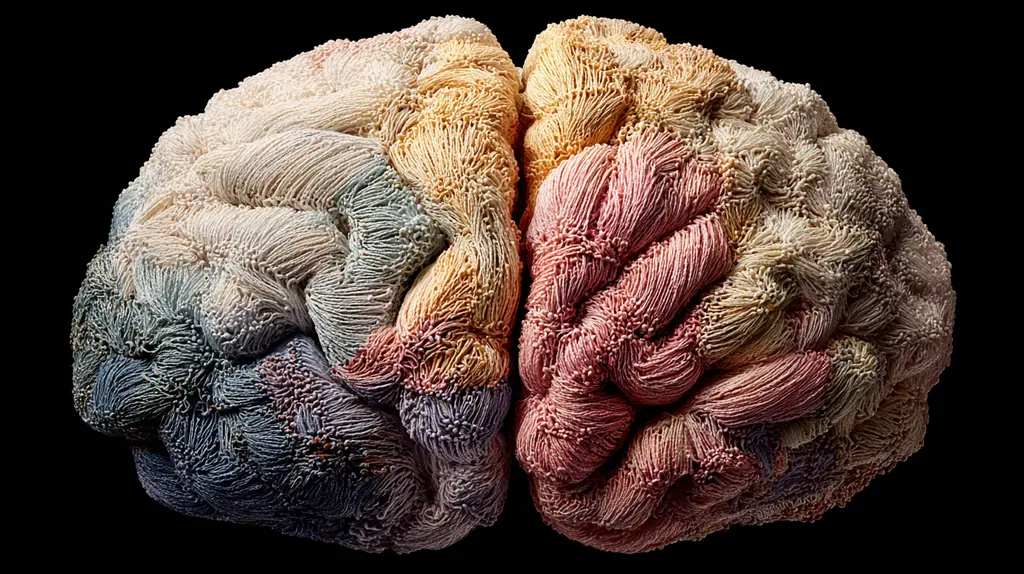
So, how does our amazing brain pull off this logical acrobatics? While scientists are still figuring out all the super specific details, we know that areas in our prefrontal cortex are super important. This is like the brain’s executive suite, handling things like planning, decision-making, and working memory – basically all the complex stuff we need to juggle different pieces of information and connect them logically. Our ability to hold premises in mind and then manipulate them to reach a conclusion relies heavily on these frontal lobe functions. It’s like our brain has its own built-in logic processor that’s constantly running in the background!
- LVIS Neuromatch – Explore advanced AI solutions for neuroscience.
- Neuvera – Discover more about cognitive assessment and brain health.