Building Blocks of Vision: The Geons Theory
Imagine your brain is like a super-efficient LEGO master! Recognition-by-Components, or RBC, is a cognitive theory that suggests we recognize objects by breaking them down into basic 3D shapes, called “geons.” Think of geons as the fundamental alphabet of visual perception – simple geometric forms like cylinders, cones, blocks, and spheres. When you look at something, your brain doesn’t try to match a perfect picture in its memory. Instead, it quickly identifies these geons, their arrangement, and their connections. This clever trick allows us to recognize a vast array of objects from almost any viewpoint, even if parts are hidden, because we’re focusing on these stable, viewpoint-invariant building blocks!
See the world in shapes!
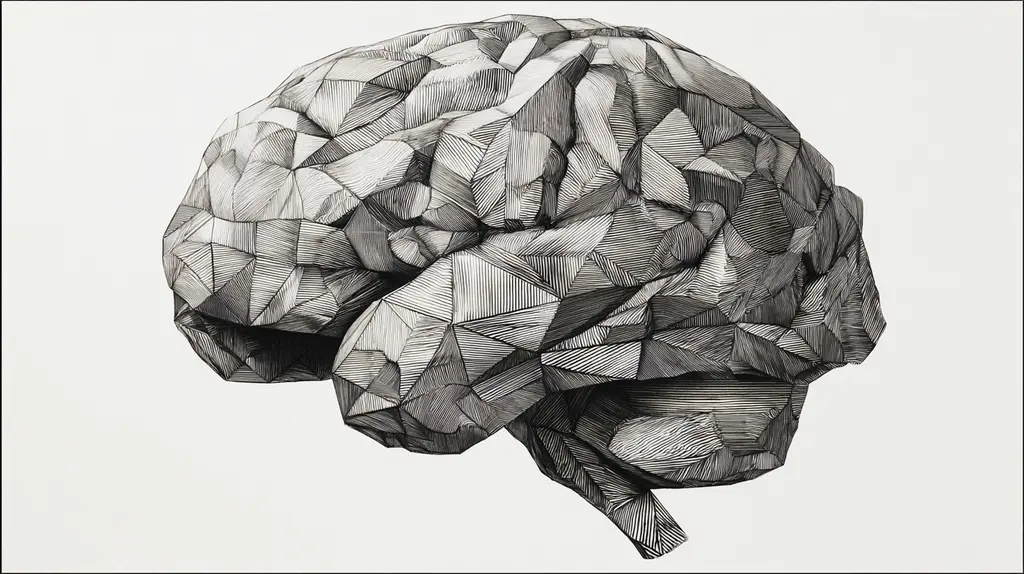
Why Geons Matter: A Robust Way to See the World
The beauty of RBC lies in its efficiency and robustness. Since geons are viewpoint-invariant, meaning they look the same from most angles, our brain doesn’t have to store countless images of every object from every possible perspective. This makes object recognition incredibly fast and flexible. Whether you see a coffee mug from the side, top, or slightly angled, your brain quickly extracts its cylindrical body and curved handle geons and puts them together. This “parts-based” approach also explains why we can recognize novel objects or distinguish between similar ones – it’s all about how those fundamental geons are assembled and related to each other. It’s like having a universal visual dictionary!
RBC and Beyond: Connecting to Real-World Brain Stuff
Can RBC Help Us Understand Brain Disorders?
Totally! Understanding how normal object recognition works through theories like RBC can give us crucial insights into various neurological and psychiatric conditions. For instance, individuals with certain types of agnosia – a condition where people struggle to recognize objects despite having intact vision – might have impairments in their ability to extract or assemble geons. Studying these deficits can help researchers pinpoint which specific brain regions or cognitive processes are disrupted. It also informs therapies and rehabilitation strategies, aiming to help patients rebuild or compensate for their impaired object recognition abilities. It’s a powerful tool for understanding both typical and atypical brain function!
What are the ‘Oops’ Moments? Limitations of RBC Theory
Okay, so RBC sounds pretty amazing, right? But like any good theory, it has its limits! One major critique is that while it’s great at explaining how we recognize basic-level objects (like “chair” or “dog”), it struggles with “subordinate-level” recognition, like distinguishing between different breeds of dogs (a pug vs. a poodle). All dogs share similar geons, so RBC alone can’t easily explain how we tell them apart. It also doesn’t fully account for context effects – how seeing an object in a kitchen makes it easier to recognize as a toaster, for example. Plus, it might oversimplify the complexity of object recognition, as our brains use more than just geons!
How Does RBC Play with Other Theories?
RBC isn’t the only game in town when it comes to object recognition. Other theories, like “template matching” (where we store specific images) or “feature detection” (where we look for simple features like lines and edges), also exist. While template matching is too rigid, and feature detection might be too basic, RBC offers a nice middle ground by using abstract 3D shapes. Many cognitive scientists now believe that our brains probably use a combination of these approaches. We might use RBC for quick, initial recognition, then integrate more detailed feature analysis or contextual cues to fine-tune our perception. It’s a team effort in our amazing brains!
- LVIS Neuromatch – Explore advanced AI solutions for neuroscience.
- Neuvera – Discover more about cognitive assessment and brain health.