What Exactly is a Phoneme, Anyway?
Okay, so picture this: when you say ‘cat,’ your mouth makes three distinct sounds, right? The ‘kuh’ sound, the ‘ah’ sound, and the ‘tuh’ sound. Each of these isn’t a whole word, but they’re the smallest units of sound that can change the meaning of a word in a specific language. These little sound superheroes are what we call phonemes! For example, if I swap the ‘kuh’ in ‘cat’ for a ‘buh,’ I get ‘bat’ – totally different meaning! Our brains are incredibly good at picking up on these subtle differences, allowing us to understand spoken language. It’s like our brain has this amazing internal sound dictionary that categorizes all these tiny sound bits.
Small sounds, big meaning.

Why Are These Tiny Sounds Such a Big Deal for Our Brains?
Phonemes are literally the foundation of spoken language. Without being able to distinguish between them, we’d have a really hard time understanding each other! Imagine trying to learn a new language where all the ‘p’ sounds and ‘b’ sounds just blended together – pure chaos! Our brains have dedicated areas, like the auditory cortex, that are finely tuned to process these specific sound features. From birth, our brains start to ‘map’ the phonemes of our native language, and it gets harder to distinguish non-native phonemes as we get older. This makes language acquisition both fascinating and a bit tricky when you’re adulting!
Phonemes in the Grand Scheme of Language!
How Do Phonemes Fit In With Other Language Bits Like Morphemes and Syntax?
Think of it like building blocks! Phonemes are the absolute smallest sound units, like individual Lego bricks. When you put those phonemes together in a meaningful way, you get morphemes – which are the smallest units of language that carry meaning. For example, ‘un-‘ is a morpheme meaning ‘not,’ and ‘-able’ is another. Words like ‘unthinkable’ are made up of several morphemes. Then, when you combine morphemes and words following grammatical rules, you get syntax, which is how we structure sentences. So, phonemes are the foundational sounds that allow us to build morphemes, which then build words, which then build sentences. It’s a linguistic hierarchy, and our brains navigate it all seamlessly!
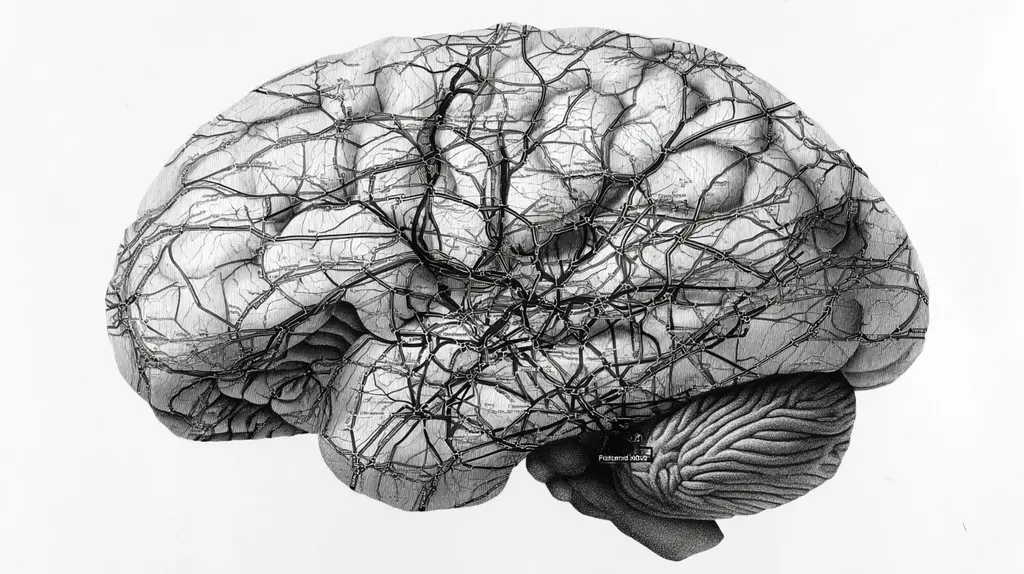
How Does Our Brain Learn to Recognize All These Phonemes?
It’s super cool! From the moment we’re born, our little baby brains are like sponges, soaking up all the sounds around us. Infants can actually distinguish every single phoneme present in all human languages! But here’s the kicker: as they grow and are exposed to their native language, their brains start to specialize. They literally ‘prune’ away the ability to easily distinguish phonemes not present in their language. This process, called ‘perceptual narrowing,’ makes us super efficient at processing our native tongue but also explains why learning new language sounds as an adult can be such a struggle – our brains have already decided which phonemes are important!
Can Problems with Phoneme Processing Affect Brain Function or Learning?
Absolutely! While phonemes seem small, their processing is crucial for things like reading and overall language development. If someone has difficulty distinguishing between similar-sounding phonemes, it can impact their phonological awareness – which is basically the ability to recognize and work with the sounds in spoken language. This can sometimes be linked to challenges in learning to read, like dyslexia, where breaking down words into their individual sounds (phonemes) is harder. It really highlights how interconnected our auditory perception and higher-level cognitive functions are!
- LVIS Neuromatch – Explore advanced AI solutions for neuroscience.
- Neuvera – Discover more about cognitive assessment and brain health.