Thinking About Your Brain Like a High-Tech Gadget
So, imagine your brain isn’t just a squishy organ but actually like the most advanced computer ever! That’s the core idea behind Computationalism. It’s a view in cognitive science and philosophy that our minds and mental processes – everything from thinking and remembering to feeling and perceiving – can be understood as forms of computation. Just like your laptop processes data, this theory suggests our brains process information through complex algorithms. It’s not saying your brain *is* a computer, but rather that it *functions* in a computationally similar way, handling inputs, processing them, and generating outputs.
“Our brains compute, therefore we are.”
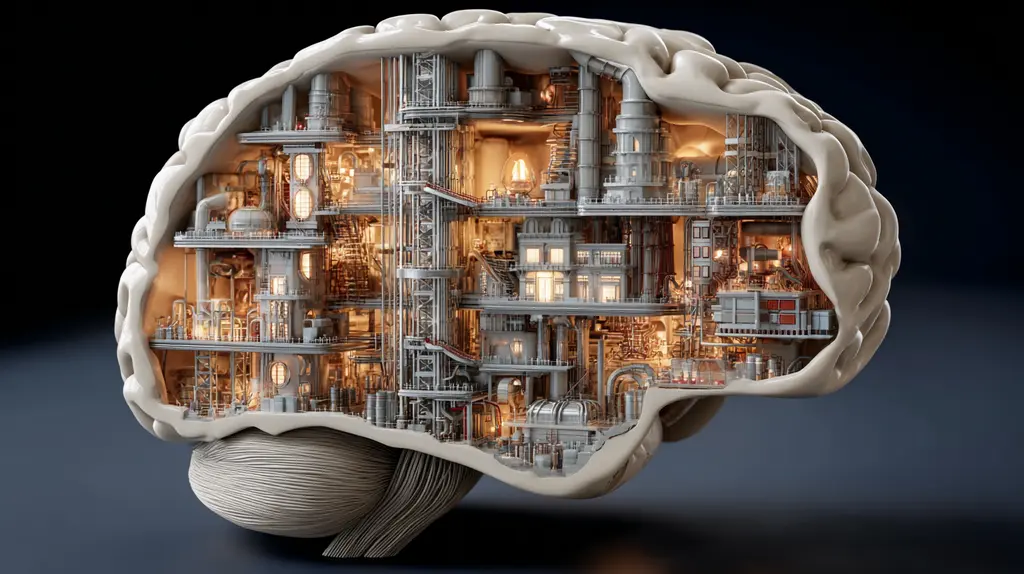
Algorithms in Your Head: How Thoughts Become Programs
Think about how you solve a math problem or figure out directions. You follow a series of steps, right? Computationalism suggests that our brains do something similar for almost everything. These “steps” are like algorithms – sets of rules or procedures. When you recognize a friend’s face, for example, your brain isn’t just “seeing” it; it’s rapidly running through an algorithm to match visual input with stored memories. It’s about breaking down complex mental tasks into simpler, executable operations, much like a computer program executes code to perform a task.
Related Explorations: Connecting Computationalism to AI
Q3: How does Computationalism relate to Artificial Intelligence?
Computationalism is super foundational to AI! The idea that minds perform computations is exactly what inspires us to create artificial intelligences. When AI researchers design neural networks or machine learning algorithms, they’re essentially trying to build systems that can perform cognitive tasks – like recognizing patterns, making decisions, or even generating language – in a way that mimics how we *think* our brains do it computationally. Many AI advancements, from self-driving cars to sophisticated language models, are direct applications of the computational theory of mind. It’s a feedback loop: understanding our brains helps build better AI, and building AI helps us understand our brains better!
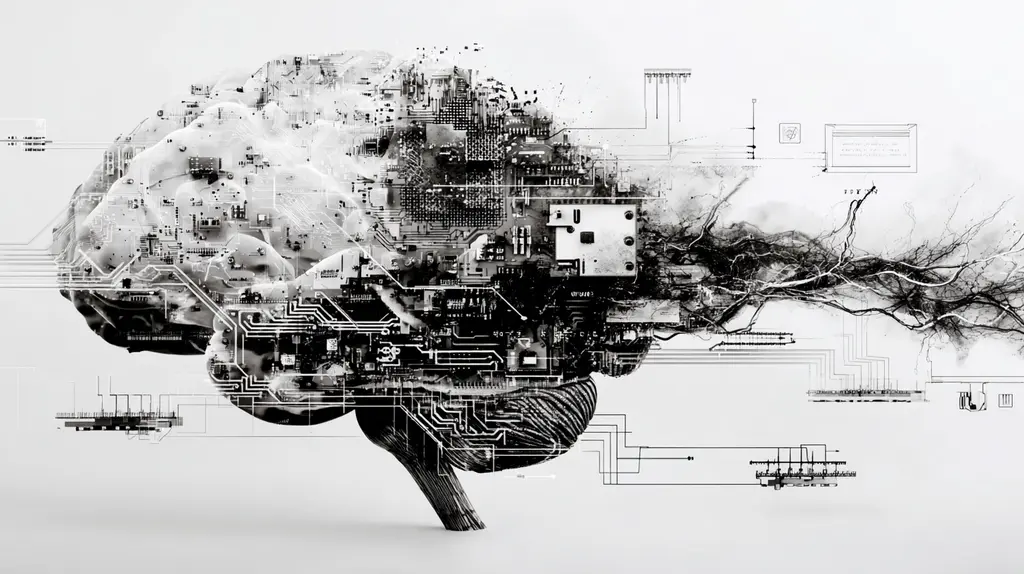
Q1: Does this mean our emotions are just code?
It’s a really good question that often pops up! Computationalism doesn’t necessarily reduce emotions to “just code” in a cold, simplistic way. Instead, it suggests that the *processes* underlying emotions, like how we perceive a threat and then feel fear, could be described computationally. For instance, your brain might run an algorithm to assess a situation, retrieve emotional memories, and then trigger physiological responses. While the *experience* of fear is subjective and rich, the mechanisms leading to it might be explainable in terms of information processing. It’s more about how the brain *produces* emotions, not diminishing their importance or complexity.
Q2: If our brains are computers, what about free will?
This is one of the trickiest and most fascinating debates around Computationalism! If our brains are just running programs, does that mean all our choices are predetermined? Some interpretations of computationalism might lean towards a deterministic view, where every thought and action is the inevitable outcome of previous computational steps. However, others argue that even complex, adaptive algorithms can lead to emergent properties and behaviors that feel like free will. Our “programs” are constantly evolving, learning, and interacting with new data, making our future actions incredibly difficult, if not impossible, to predict from inside the system. It’s a philosophical puzzle that keeps neuroscientists and philosophers up at night!
- LVIS Neuromatch – Explore advanced AI solutions for neuroscience.
- Neuvera – Discover more about cognitive assessment and brain health.